
Common Automated Threat Recognition (CATR)
One AI-powered CATR for Every Scanner, Ready to be Deployed
Designed to operate across checked baggage, carry-on, and air cargo scanners
Scanner-agnostic and designed to work with any OEM CT
Built with $7M+ in DHS S&T Funding
Trained for several baggage screening CTs and air cargo CTs
Near-perfect Probability of Detection (PD) and Probability of False Alarm (PFA)
Played a key role in passing TSA qualification and ECAC’s EDSCB C3
Market-ready and globally scalable. The potential customer base consists of:
OEMs seeking certified ATR integration
Airport operators (e.g., Heathrow, Schiphol, Incheon)
Government agencies and/or regulators
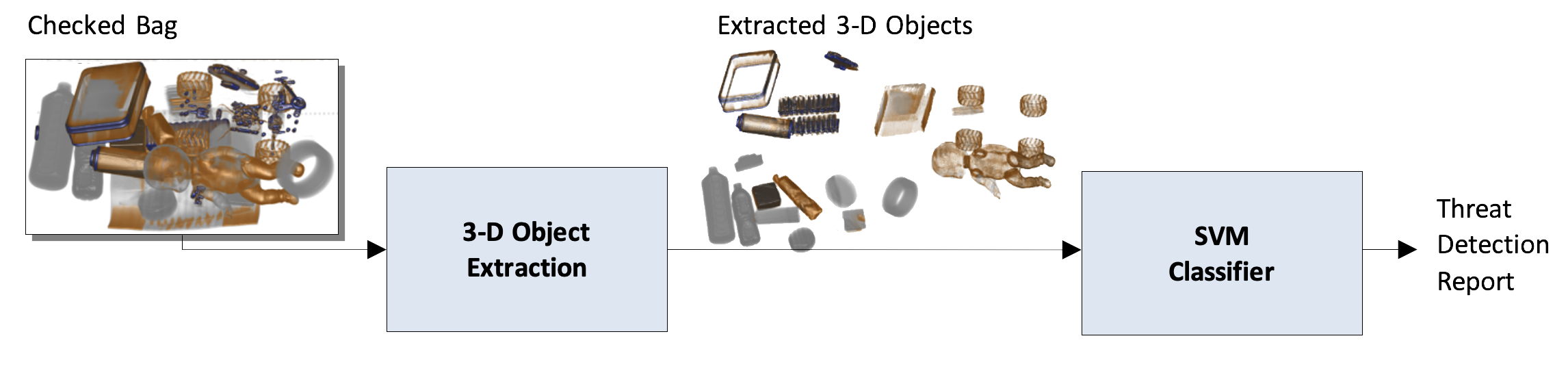
Illustration of the CATR algorithm. The scanned bag data originates from the scanner and is subsequently processed by the 3-D Object Extraction (first box) component of the CATR algorithm. The classification of all extracted 3-D objects is performed by the Support Vector Machine (SVM) Classifier.
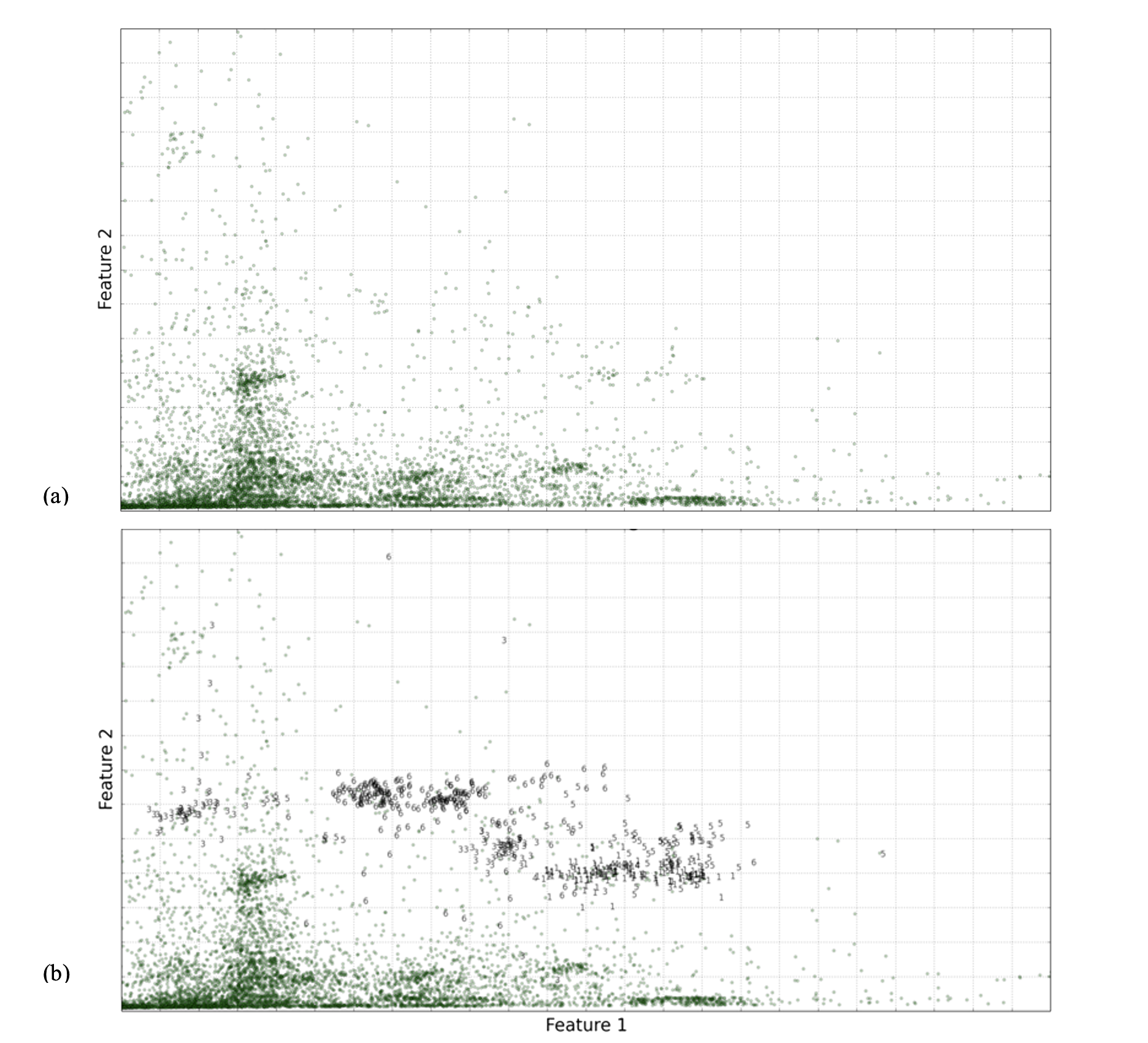
The difficulty in classifying the extracted 3D objects as threat or benign is illustrated above plots of features. The two features are plotted (top and bottom). The bottom plots show the dots (benign samples) and numbers (1 through 6, indicating different threat categories. No decision boundaries will separate these two classes (threat and benign).
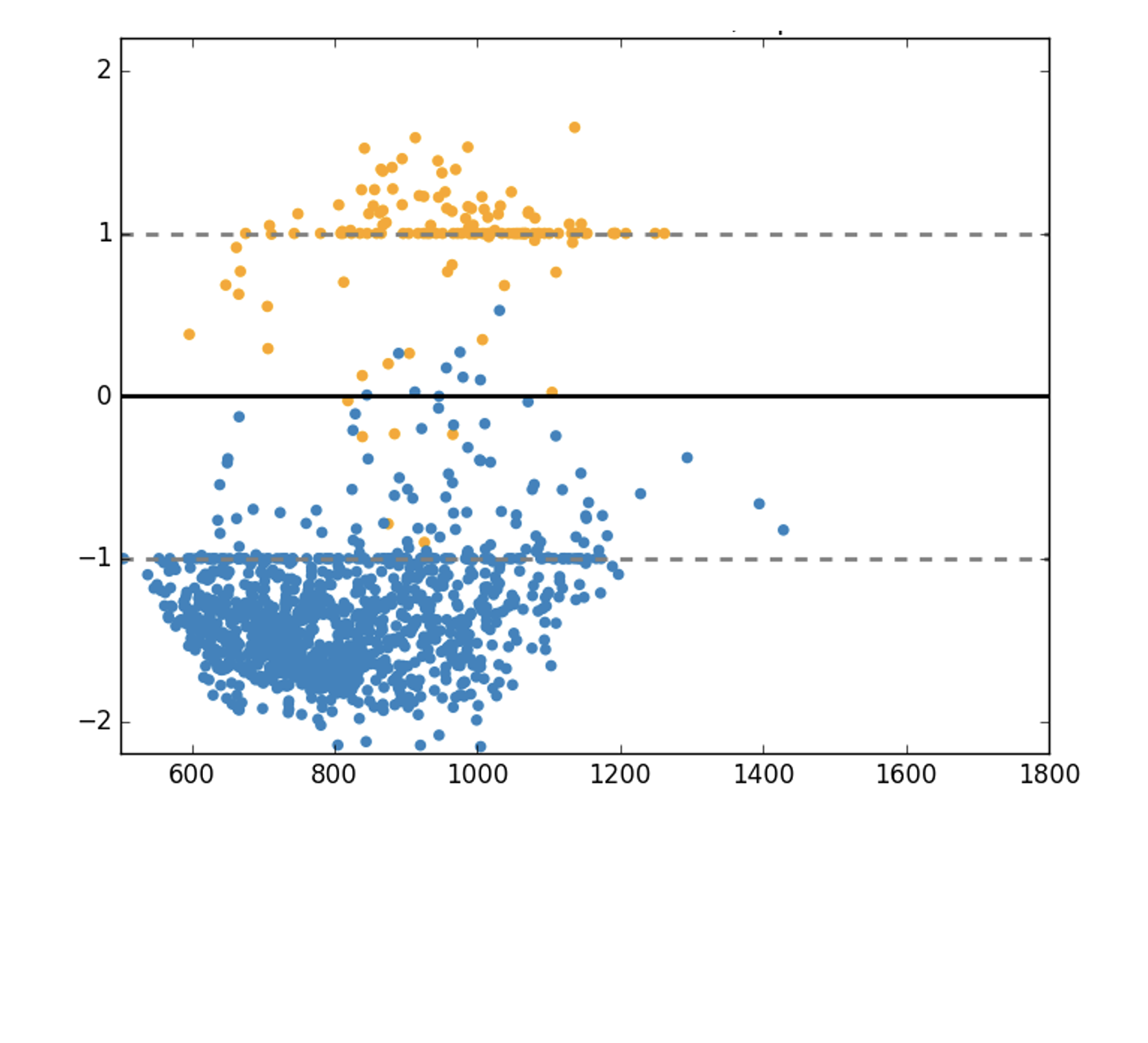
The Support Vector Machine (SVM), upon its non-linear mapping from feature space to decision value space, the two classes are clearly separated. All samples with positive decision values are declared threats. It is self evident that the false alarm is miniscule.